What is PA Page Authority and How it Affects Your Ranking?
Introduction
What is Page Authority and how it affects your ranking? Learn the meaning of Page Authority, how it works, and why it matters for SEO and Google rankings.When you publish a new blog post or page, one common question comes to mind:
“Why is this page not ranking on Google?”
Even if your website looks good and your content is helpful, some pages rank faster than others. To understand this difference, SEO tools use a metric that helps estimate how strong a single page is compared to other pages on the internet.
This article explains that concept step by step and shows how it impacts rankings, especially for beginners.
Understanding Page Strength in Simple Words
Think of your website like a house with many rooms.
- The whole house represents your website
- Each room represents a single page or blog post
Some rooms are clean, popular, and often visited. Others are new or rarely used.
SEO tools measure how strong each individual room (page) is. That strength helps predict whether the page can appear on Google search results.
This is where Page Authority comes in.
What Page Authority Really Means
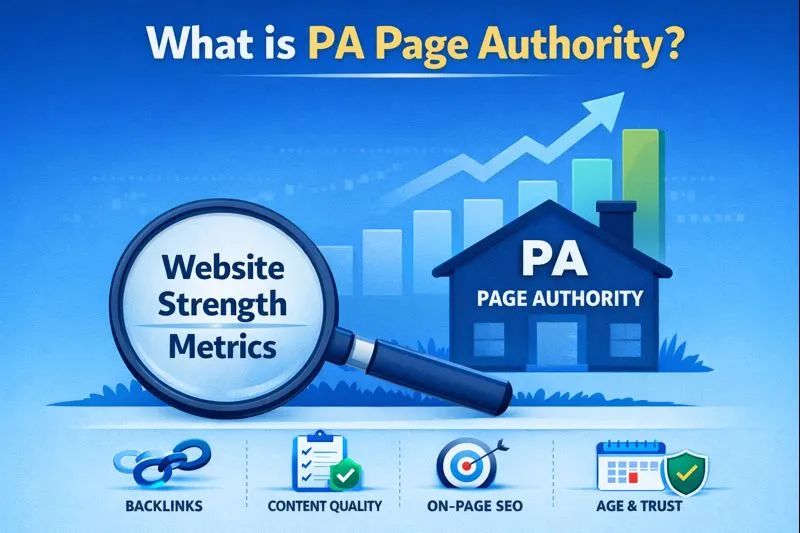
Page Authority is a score created by Moz that predicts how well a specific page can rank in search engines.
Important points to remember:
- It is measured on a scale from 1 to 100
- Higher score = stronger ranking potential
- It is calculated using link data and page-level signals
- Google does not directly use this score
SEO experts use it to compare pages, not to guarantee rankings.
How Page Authority PA Is Calculated
The score is calculated using multiple signals, mainly related to links pointing to a page.
Some key factors include:
- Number of backlinks to that page
- Quality of websites linking to it
- Relevance of linking pages
- Natural link patterns
Example:
- A new blog post may start with a low score
- A page with strong backlinks from trusted sites will have a higher score
The scale is logarithmic, which means:
- Growing from 10 → 20 is easier
- Growing from 70 → 80 is very hard
Page Authority vs Domain Authority (Simple Difference)
Many beginners get confused between these two.
Here’s an easy comparison:
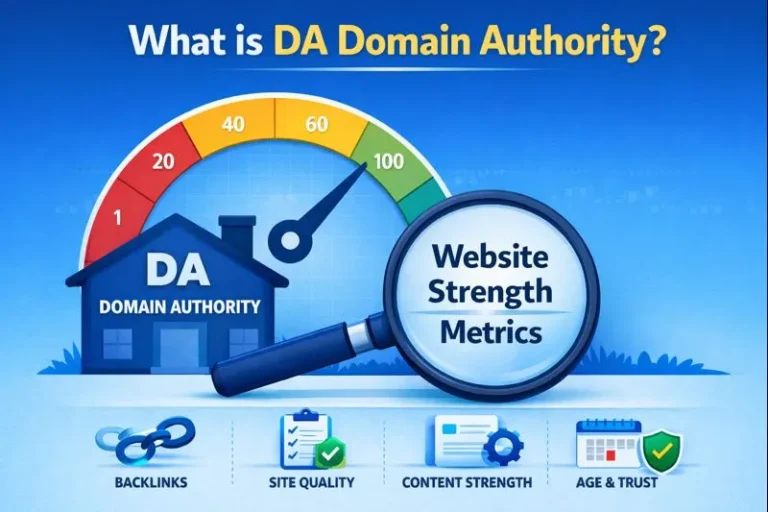
- Domain Authority = strength of the whole website
- Page Authority = strength of one specific page
Example:
A website may be strong overall, but a new page on it can still be weak until it earns trust and links.
Both metrics are useful, but for ranking a blog post, page-level strength matters more.
How Page Authority Affects Your Google Ranking
While Google does not use this metric directly, it still reflects real ranking signals.
A higher page-level score usually means:
- Better backlink profile
- More trust signals
- Higher chance to compete for difficult keywords
Pages with stronger authority often:
- Rank faster
- Hold rankings longer
- Compete against top results
However, it does not work alone.
Google still checks:
- Content quality
- Search intent match
- On-page SEO
- User experience
Common Myths About Page Authority
Let’s clear some misunderstandings.
Myth 1: High score guarantees #1 ranking
❌ False
Content and intent still matter more.
Myth 2: Google provides this score
❌ False
It is a third-party metric from SEO tools.
Myth 3: You can increase it instantly
❌ False
Real growth takes time and clean SEO work.
How to Improve Page Authority Safely
Here are proven and beginner-friendly steps.
-
Create One Strong Page at a Time
Instead of writing many weak posts, focus on one high-quality page that solves a real problem.
Helpful pages earn links naturally.
-
Build Page-Specific Backlinks
Links pointing directly to a page are very powerful.
Good sources:
- Guest posts linking to that page
- Niche blogs
- Resource lists
- Contextual mentions
Avoid:
- Spam comments
- Paid link networks
- Automated tools
-
Improve Internal Linking
Link from your existing articles to the important page.
Internal links:
- Pass authority
- Help Google understand importance
- Improve crawlability
👉 Internal Link Tip:
Link from older posts to newer important pages.
-
Optimize On-Page SEO
Make sure the page has:
- Clear headings
- Optimized title and meta description
- Fast loading speed
- Mobile-friendly layout
🔗 Helpful Resource (DoFollow):
https://developers.google.com/search/docs/fundamentals/seo-starter-guide
-
Be Patient and Consistent
Authority grows slowly, just like trust in real life.
Focus on:
✔ Quality
✔ Relevance
✔ Consistency
How to Check Page Authority
You can check page-level strength using SEO tools like:
- Moz
- Ahrefs
- SEMrush
- DA PA Checker
Many tools offer free checks for beginners.
Final Thoughts
Page Authority is not a ranking factor, but it is a useful indicator.
It helps you:
- Measure page strength
- Compare competing pages
- Plan link-building strategies
If you focus on helpful content, clean links, and user value, rankings will follow naturally.