What IS Spam Score and How Its Impact on Your SEO Performance?
Introduction
What is Spam Score and how does it affect your SEO ranking? Learn what Spam Score means, why it matters, and how to reduce risk for better search visibility. When a website does not rank even after doing SEO, many beginners feel confused.
They add content, build backlinks, but rankings still don’t improve — or sometimes even drop.
One hidden reason behind this problem is often related to website risk signals that SEO tools measure. These signals help you understand whether a site looks safe or risky in the eyes of search engines.
This article explains what Spam Score means, why it matters, and how it can affect your SEO performance, step by step and in simple language.
What Spam Score Means in Simple Words
Imagine the internet like a city of houses.
- Clean houses with good neighbors look trustworthy
- Messy houses with bad surroundings look risky
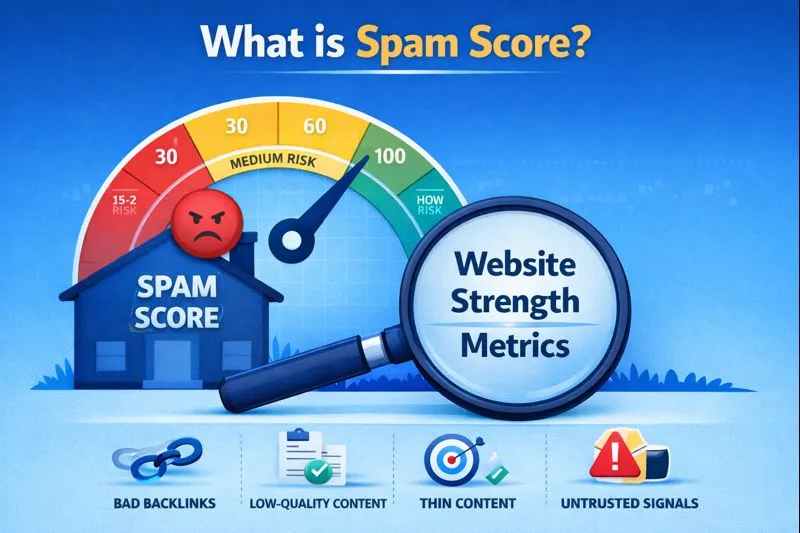
Spam Score is a metric that helps estimate how risky a website appears based on certain patterns.
It does not mean your site is spam.
It only shows the possibility of risk, based on data.
This metric was created to help website owners avoid harmful SEO practices.
Who Created Spam Score and Why
Spam Score was introduced by Moz, a trusted SEO software company.
Their goal was simple:
👉 Help users identify websites that may have spam-like signals before they cause ranking problems.
Important points:
- Google does not officially use this score
- It is a third-party SEO metric
- SEO professionals still use it widely for audits
How Spam Score Is Calculated
Spam Score is based on multiple warning signals, also called spam flags.
SEO tools analyze things like:
- Low-quality backlinks
- Thin or copied content
- Too many exact-match anchor links
- Poor site structure
- Lack of trust signals
The score is shown as a percentage, such as:
- 1% – 5% → Low risk
- 5% – 10% → Medium risk
- 10%+ → High risk
Higher percentage = higher risk signals detected.
Why Spam Score Matters for SEO
Even though Google does not show a “spam score”, it does penalize spammy behavior.
A high risk profile can lead to:
- Difficulty ranking new pages
- Sudden ranking drops
- Manual or algorithmic penalties
- Loss of trust over time
Search engines want to protect users.
If a site looks unsafe or manipulative, rankings suffer.
Spam Score helps you identify problems early, before real damage happens.
Common Reasons Websites Get High Spam Score
Here are some very common causes beginners make without realizing it.
-
Bad Backlinks
Links from:
- Spam blogs
- Auto-generated sites
- Link farms
- Irrelevant niches
These links act like bad neighbors.
-
Thin or Low-Quality Content
Pages with:
- Very short content
- No real value
- Copied or spun text
Google prefers helpful, original content.
-
Over-Optimized Anchor Text
Using the same keyword again and again in backlinks looks unnatural.
Natural links use:
- Brand names
- URLs
- Generic terms
-
Poor Website Trust Signals
Missing things like:
- About page
- Contact details
- HTTPS security
- Clear navigation
These reduce trust.
Does Spam Score Directly Affect Rankings?
Not directly but indirectly, yes.
Think of it like a warning light in a car:
- The light doesn’t stop the car
- But it shows a problem that can stop the car later
If ignored, spam signals can lead to:
- Algorithmic penalties
- Manual actions
- Long-term ranking loss
That’s why SEO experts always check this metric during audits.
How to Reduce Spam Score Safely
Here are safe and beginner-friendly steps.
-
Audit Your Backlinks
Remove or disavow links from:
- Spam domains
- Irrelevant sites
- Low-quality directories
Use trusted SEO tools for analysis.
-
Improve Content Quality
Focus on:
- Helpful answers
- Original writing
- Clear structure
Quality content naturally reduces risk.
-
Build Clean, Natural Links
Good links come from:
- Guest posts
- Niche blogs
- Editorial mentions
Avoid shortcuts.
-
Strengthen Website Trust
Make sure your site has:
- About Us page
- Contact page
- Privacy policy
- Secure HTTPS
How to Check Spam Score
You can check it using:
- Moz tools
- SEO audit platforms
- DA PA Checker
Free tools are good for beginners to monitor risk.
Final Thoughts
Spam Score is not something to fear, but something to understand and manage.
It helps you:
- Identify risky SEO practices
- Clean your backlink profile
- Protect long-term rankings
Focus on:
✔ Helpful content
✔ Natural links
✔ Trust and transparency
If you build your website for real users, search engines will trust it too.